Sermon for Advent 4 Year A 2025
Isaiah 7:10-16
Again
the Lord spoke to Ahaz, saying, Ask a sign of
the Lord your God; let it be deep as Sheol or high as
heaven. But Ahaz said, I will not ask, and I will not put
the Lord to the test. Then Isaiah said: ‘Hear then, O house
of David! Is it too little for you to weary mortals, that you weary my God
also? Therefore the Lord himself will give you a sign. Look, the young
woman is with child and shall bear a son, and shall name him
Immanuel. He shall eat curds and honey by the time he knows how to refuse
the evil and choose the good. For before the child knows how to refuse the
evil and choose the good, the land before whose two kings you are in dread will
be deserted.
Matthew
1:18-25
Now the
birth of Jesus the Messiah took place in this way. When his mother Mary
had been engaged to Joseph, but before they lived together, she was found to be
with child from the Holy Spirit. Her husband Joseph, being a righteous man
and unwilling to expose her to public disgrace, planned to dismiss her
quietly. But just when he had resolved to do this, an angel of the Lord
appeared to him in a dream and said, ‘Joseph, son of David, do not be afraid to
take Mary as your wife, for the child conceived in her is from the Holy
Spirit. She will bear a son, and you are to name him Jesus, for he will
save his people from their sins.’ All this took place to fulfil what had
been spoken by the Lord through the prophet:
‘Look, the
virgin shall conceive and bear a son,
and they shall name him Emmanuel’,
which means, ‘God is with us.’ When Joseph awoke from sleep, he did as the angel of the Lord commanded him; he took her as his wife, but had no marital relations with her until she had borne a son; and he named him Jesus.
Sermon
Have you
ever buried a time-capsule, or put a message in a bottle, or left an anonymous
note or gift hidden somewhere, not knowing who might one day open it, and what
they might think of your message? That’s pretty much what happened to the
familiar words we’ve heard in Isaiah.
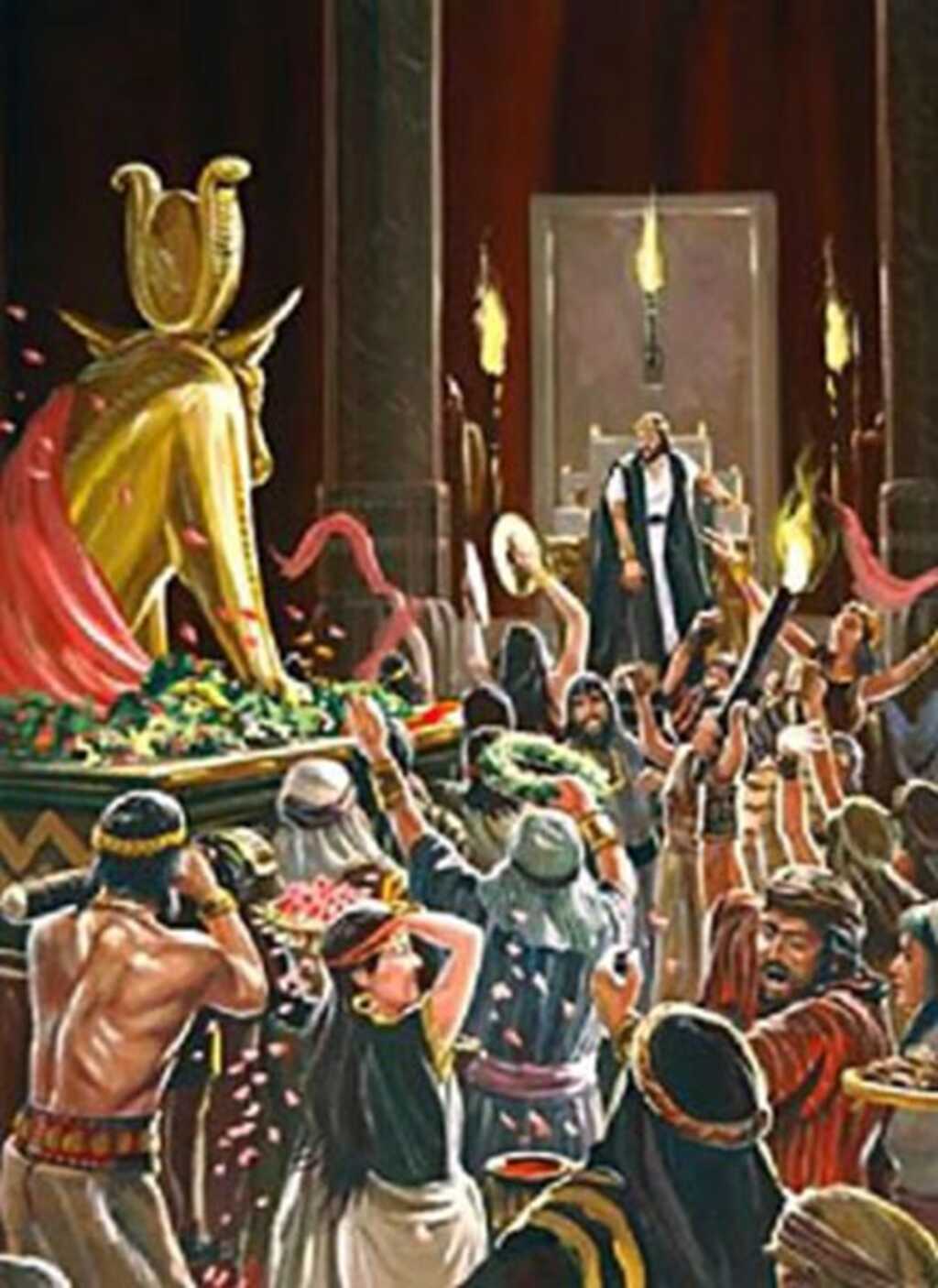
King Ahaz is
afraid. The kingdom of Judah, his kingdom, is under threat from the northern
kingdom of Israel and the kingdom of Aram, and he is facing a choice. Will he
trust God for their literal salvation and the defeat of his enemies, or will he
form a political alliance with neighbouring Assyria. His conundrum creates a question we might ask
ourselves on another level every day ‘do I trust God, or do I take practical
steps to ensure things work out, or can I somehow find a faith-in-action,
knowing that God has not put me here on earth as a bystander, but as a vessel
of God’s work, glory, salvation, and love?
But Isaiah
the first is a real pacifist, and this part of Isaiah’s prophecy is written
before the people of Judah encounter any major hardships, it’s around 730 BC,
only a few centuries after King David, and the tone is really more about seeing
what God can do. So Ahaz, the king of Judah, is challenged to ask God for a
sign, but, knowing the ten commandments to forbid putting God to the test, he
refuses. God, therefore, offers Ahaz a sign. The young woman will conceive and
bear a son, and will call him Emmanuel.
But Ahaz doesn’t
respond, he doesn’t even seem to hear the strange prophecy that he has been
given. The prophecy will have absolutely no effect on him whatsoever. Ahaz
turns into a tyrant, he becomes influenced by Assyrian culture and customs, creates
large pagan altars, he locks the Jewish people out of the temple in Jerusalem
where they worship God, he reigns in terror, allowing his fear of being
defeated to turn him into a dictator and abuser. This strange little phrase
about a young woman conceiving a child doesn’t stick, except in the written words
of Isaiah, the prophet most widely known at the time of Jesus.
On the 28th
December we will remember the actions of another King of Judah who, seven
hundred years later, didn’t pay attention to what God was promising his people.
King Herod will also be defined by his fear being usurped, ordering the
immediate massacre of all infant boys under two because of a prophecy that
crossed cultures.
In Luke’s
Gospel we hear the story of the annunciation through Mary’s eyes, in Matthew,
as we’ve just heard, we see it through the perspective of Joseph. Joseph is
described as a righteous man, and righteousness in this period of time isn’t
some spiritual state of holiness and Christian example, it’s just someone who
lives a life that is right according to the law. Joseph lives life by the
rules.
Mary tells
Joe that she’s pregnant, and Joseph probably spirals into panic, but not
without compassion for Mary. And being a righteous man he looks at the law,
sees that she could either be poisoned or stoned if he goes to the priest, and instead
decides to call off the engagement without a fuss, so as to save her life. Then
the Angel appears to Joseph in a dream.
Way back in
the book of Judges, we see a similar story. An unnamed woman encounters an
angel in the field, who tells her she is going to have a son who will be a nazirine,
a man dedicated to God. She tells her husband and he doesn’t believe her. The
angel comes again, she tells her husband, he doesn’t believe her. The angel
comes a third time, she says ‘wait here whilst I fetch my husband’, the husband
sees the angel and asks to hear the message, and the angel says ‘I’ve already
told your wife’… with the subscript being ‘go on…ask her’. They go on to have
the child Samson, the boy with the hair, who is about as disobedient as a man
of God can be and fails to live up to the call on his life. But all this to say
that when God wants to convey a message about a pregnancy, there is a precedent
in scripture for God sending an angel to the woman, and for the woman to have
to take on the risky task of passing it on to their husband, or betrothed.
Mary is
immensely obedient and faithful to God’s call. She, like king Ahaz and later
Herod, trembles with fear, but unlike the kings, she doesn’t take things into
her own hands, or dismiss the angel, or fail to pay attention to the prophecy.
Mary listens to God, Mary accepts God’s will, with only one clarifying question,
and then Mary takes on the difficult task of telling Joseph, and, presumably
her family.
Joseph,
though a little slower, is a man of God, and a man of compassion. He is also
threatened by the news of an unexpected pregnancy that could bring shame on him
and his family, but when he consults the law, he chooses, unusually, not to
follow it, but to take the more compassionate option of dissolving their
betrothal quietly. Then when the angel confirms Mary’s story, Joseph decides to
join himself to Mary instead, and to share her fate. When the child is born,
Joseph names him, as an act of adoption, Jesus, which has the same root as
Isaiah, and Joshua, meaning ‘God saves’.
What’s in a
name?
When my
parents named me, they had to put aside their first choice of Hector, and went
with Leila, meaning ’night’ after my great aunt Leila, Nadezhda, meaning
‘hope’, after my Yugoslavian granny, and Isabella, which means ‘consecrated to
God’. It’s this last one that they should really have reconsidered if they
didn’t want a priest for a daughter, but each one of those names has come to
mean something in my life. I am a night owl, I am an optimist, and I have found
the most immense joy in dedicating my entire life to God and to God’s people,
you lot!
Our names
mean something. Jesus’ name, Jeshua (the same root as Joshua and Isaiah)
foretold his life’s work, not just whilst he was on earth, but from and for
eternity: God saves. And that little one verse, the message from Isaiah to
Ahaz, that was lost to time and ignored by the king, suddenly found its way
into Matthew’s Gospel, and into our Christmas story. A young woman shall
conceive and bear a son, and shall call his name Emmanuel, God with us.
At your
baptism, each of you was given a name, not just the Christian name by which
everyone else knows you, but the name ‘child of God’ was placed on you
irreversibly. By your baptism you are one with Christ, in the Eucharist we are
united in his passion, his body and blood, and in our celebration of his birth,
and of his parents faithfulness to God in this last week of Advent, we are
called to pay attention to how God comes among us, reawakening old promises,
like the ancient magic of Narnia, that were made over us in baptism, calling us
to listen to God’s voice even when the words we hear are words we don’t yet
understand, and urging us to humble ourselves, just as God incarnate came in
humility, and as Mary accepted the angel’s message, and as Joseph chose to
share in Mary’s life and accept Jesus as his own son, and to prepare a place
for the Christchild in our hearts and lives and homes.
Amen.

